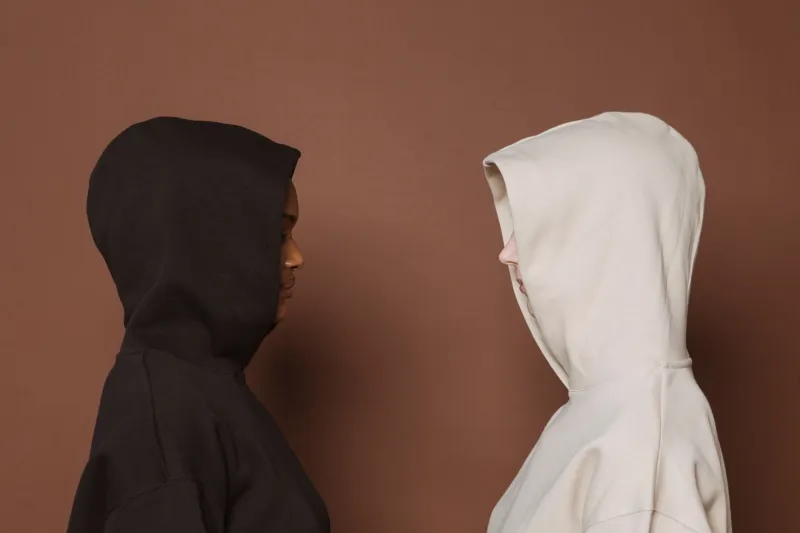
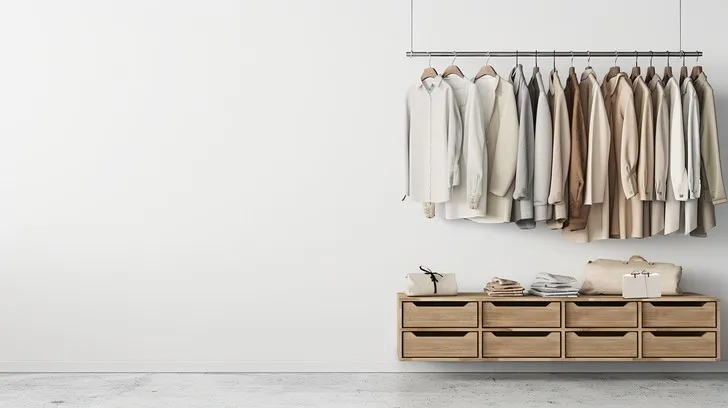
Exhibit A: The Outfit You Definitely Assembled Just for You
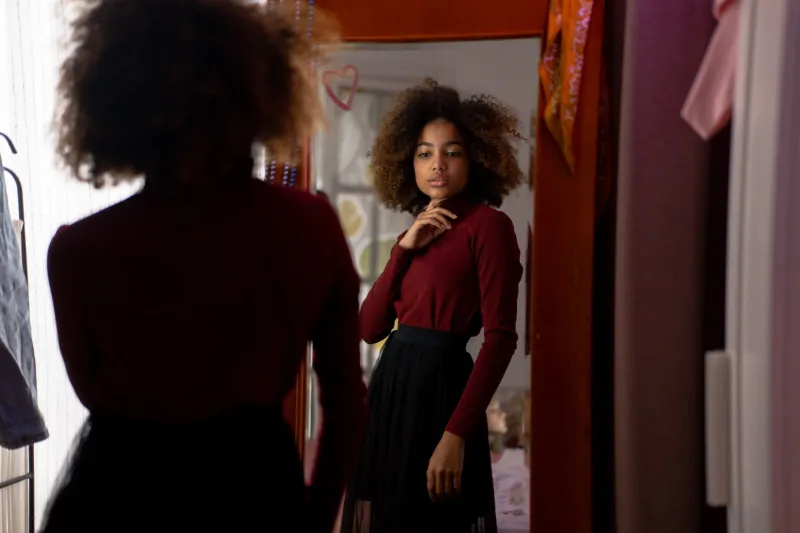
The courtroom is called to order.
On the docket today: one of the most passionately repeated, aggressively defended, and statistically dubious claims in modern American fashion culture. The defendant — a carefully assembled outfit consisting of barrel-leg jeans, a tucked cream linen blouse, gold hoops, and white leather sneakers — stands accused of being entirely, suspiciously, algorithmically on-trend while its owner maintains, with absolute conviction, that it was assembled in a vacuum of pure personal expression.
The prosecution would like to introduce five exhibits.
Exhibit One: The 'Effortless' Sunday Brunch Look
Witness for the prosecution: your own camera roll.
The defendant claims the oversized blazer, straight-leg trousers, and barely-there ballet flat combination emerged organically from a deep, private relationship with personal style. The prosecution notes, however, that this exact silhouette appeared on your TikTok For You Page approximately forty-seven times in the two weeks preceding the outfit's construction. Three separate influencers you follow — none of whom you would describe as influences — wore a version of this look within the same calendar month. A sale notification from a retailer you 'just happened to have downloaded' arrived at 11:43 PM on a Thursday.
The defendant maintains: coincidence.
The prosecution rests, briefly, to collect itself.
There is a particular psychological acrobatics required to hold the 'I dress for myself' position, and it deserves genuine respect as an intellectual feat. It requires simultaneously acknowledging that you consume enormous quantities of fashion content — scroll, save, screenshot, repeat — while maintaining that none of it penetrated the sovereign territory of your personal taste. You are both a passive observer of trends and a completely independent creative agent. You are the algorithm and also entirely above it. This is impressive. This is, frankly, Olympic-level compartmentalization.
Exhibit Two: The Going-Out Top That Went Viral the Week Before
The second outfit in question is a backless satin top purchased after a forty-five-minute deep dive into 'going out tops that look expensive' search results. The defendant does not remember conducting this search. The defendant remembers, instead, 'just knowing' it was right when they saw it.
This is actually the most human thing about fashion, and the prosecution wants to be clear: there is no malice in the self-deception. The moment when something clicks — when a garment feels inevitable, feels like you — is real. The feeling is genuine even when its origins are a Pinterest board you made at 1 AM called 'her' with no further elaboration.
We absorb influences the way we absorb everything else in the modern attention economy: constantly, invisibly, and with very little conscious consent. The TikTok algorithm did not ask permission before it rewired your aesthetic preferences over eighteen months of micro-targeted content delivery. It simply did it. You simply let it. And then you stood in front of the mirror in the backless satin top and thought: this is so me.
And here's the uncomfortable part — it kind of is.
Exhibit Three: The 'No One Dresses Like This Around Here' Defense
A popular sub-argument of the 'I dress for myself' position is the claim of radical local originality. You are ahead of your surroundings. Your city hasn't caught up. You discovered this silhouette before it was everywhere, which is technically true if 'everywhere' means your immediate zip code and 'discovered' means saw it on a Substack newsletter about quiet luxury.
This is not dressing for yourself. This is dressing for a future audience you are pre-emptively performing for. Which is, in its own way, aspirational and kind of beautiful, but it is not the same thing as pure self-expression untethered from external validation.
The prosecution would like to gently point out that the outfit you wore to the farmer's market last Saturday — the one you described as 'just something I threw on' — was photographed from three angles before you left the house. One of those angles was specifically for stories.
Exhibit Four: The Compliment Cross-Examination
If you truly dressed only for yourself, compliments would be pleasant but irrelevant. A neutral data point. Nice, but not the point.
The court would like to know, then, why the absence of compliments on a particular outfit — the one you were sure about, the one that felt so right — produces a specific, low-grade anxiety that you carry through the rest of the day like a stone in your shoe. Why does 'nobody said anything about the trousers' become a verdict you replay? Why does one enthusiastic 'oh my god, where did you get that top?' from a coworker whose opinion you claim not to care about produce a satisfaction that is, let's be honest, disproportionate to the stated stakes?
The defense objects. The court overrules.
We are social creatures who evolved in communities where how we presented ourselves had genuine survival implications. The desire for external validation through appearance is not shallow or embarrassing — it is ancient and deeply wired. The problem is not that we dress partly for other people. The problem is the exhausting performance of pretending we don't.
Exhibit Five: The Verdict (Which Is About All of Us)
Here is what the prosecution actually believes, after reviewing all five outfits and interviewing the defendant at length:
You dress for yourself and for the algorithm and for the person you want to become and for your ex who follows you on Instagram and for the version of your life you are quietly constructing one carefully considered purchase at a time. These motivations coexist. They are not mutually exclusive. They are, in fact, the whole complicated human point.
The outfit is never just an outfit. It is a mood board, a manifesto, a projection, a comfort object, and occasionally a cry for help. It is influenced by everything you've ever seen and everyone you've ever wanted to impress, including yourself — which is the part that actually makes 'I dress for myself' true, just not in the way anyone means when they say it.
The court finds the defendant: guilty of being a person who lives in a culture, consumes media, has feelings about how they're perceived, and also genuinely loves that cream linen blouse.
Sentence: continue wearing it. Just stop pretending the TikTok algorithm wasn't your co-stylist.
Court adjourned.