Six-Month Capsule Wardrobe Check-In: Where Did It All Go Wrong (And Where Did the Sequins Come From)?
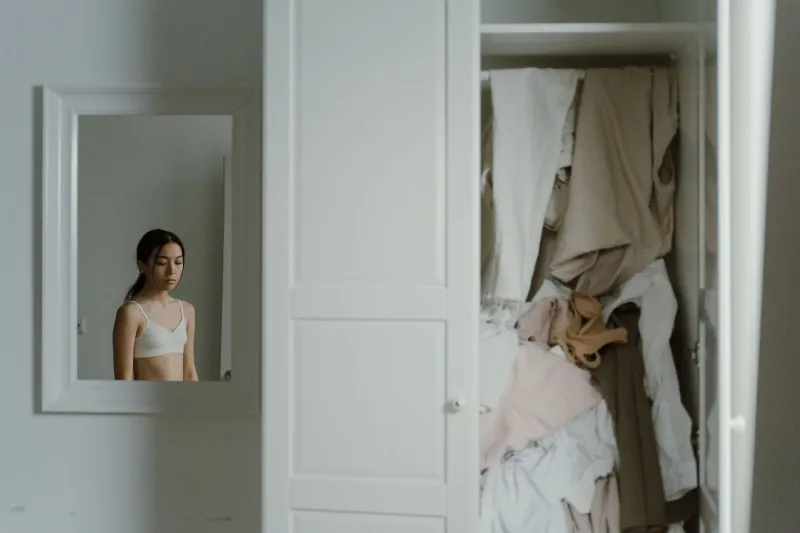
In January, you watched one YouTube video about intentional dressing and decided to rebuild your entire wardrobe from scratch. It was going to be ten pieces, all neutral, all perfect. It is now July. We need to talk about the sequined top.
Thread Critic has conducted a thorough investigative review of your capsule wardrobe journey — a six-month audit of your closet, your purchase history, and your increasingly creative relationship with the word "essential" — and the findings are, frankly, illuminating. This is not a judgment. This is a progress report. The distinction is academic at this point, but we're keeping it.
The January Hypothesis
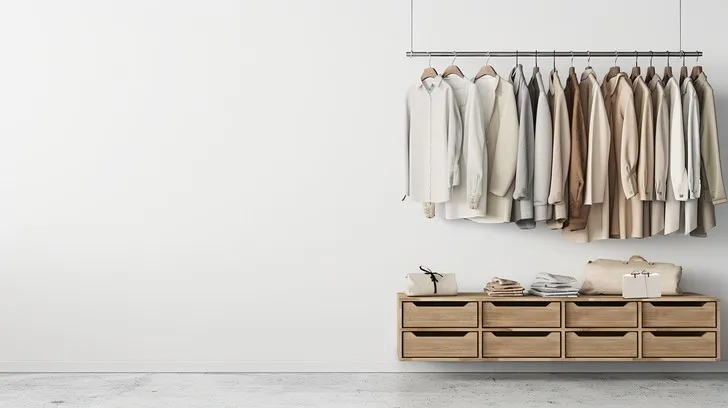
The original plan was elegant in its simplicity. Ten pieces. Maybe twelve, if you counted shoes. All in a muted palette — cream, oatmeal, camel, that particular shade of sage green that appears in every lifestyle influencer's flat lay. Everything would coordinate. Everything would breathe. You would become, in the language of the YouTube video, intentional.
You wrote a list. You made a color palette moodboard on Pinterest. You used the word "cohesive" in a text to your friend and meant it sincerely. You were, for approximately eleven days in January, a different and better person.
Then February happened.
The Gap Problem (Items 11–19)
The first cracks appeared quickly, because a ten-piece wardrobe has a structural flaw that the YouTube video did not adequately address: gaps. Not emotional gaps — literal wardrobe gaps. Situations your curated ten pieces were not equipped to handle.
You needed something for a birthday dinner. The cream linen shirt wasn't quite right. You needed something for a work event that wasn't the camel blazer again. You needed something for the weekend that wasn't technically athleisure but also wasn't trying too hard. Each gap was real. Each gap was urgent. Each gap was solved with a purchase that was, at the time of purchase, described as "filling a specific need."
By Valentine's Day, you had nineteen pieces. You told yourself the capsule was still intact — it had simply expanded to accommodate real life. This is the same logic used to justify every stadium renovation that goes $200 million over budget. It sounds reasonable until you look at the final number.
The Linen Co-Ord Incident (March)
March brought a warm weekend and a TikTok algorithm that had clearly been watching your search history. The linen co-ord set appeared in your For You page. It was the color of a Mediterranean afternoon. The influencer wearing it was standing near what appeared to be a whitewashed wall in Santorini, though she was almost certainly in her apartment in Scottsdale.
You bought the co-ord set. You reasoned that linen was a natural fiber and therefore aligned with the intentional, quality-focused philosophy of the capsule wardrobe. You wore the top twice. The bottoms are still in the plastic bag they shipped in, waiting for an occasion that has not yet materialized.
The co-ord set is now part of the capsule. You have updated the definition of the capsule accordingly.
A Forensic Inventory of What 'Filling Gaps' Actually Produced
We asked you to pull everything from your closet and count. You resisted. We waited. Here is the current inventory, as of this filing:
- Cream/white tops: 7 (you needed "the right one")
- Straight-leg trousers: 4 (three in slightly different shades of black, one in a tan that "photographs better")
- Blazers: 5 (the camel one from January plus four additional blazers acquired in a period you now refer to as "the blazer months")
- Denim: 6 pairs (you were "just looking" at Madewell and then the sale happened)
- Linen co-ord set: 1 (the Santorini situation)
- Sequined going-out top from 2019: 1 (you "kept it for contrast")
- Impulse dress bought in an airport Hudson News adjacent store: 1 (we have questions)
- Misc. items described as 'transitional': 9
Total: 34 items, not including shoes, which you have also been buying separately under the separate and equally fictional framework of "building a shoe capsule."
The Sequined Top: A Special Investigation
The sequined top deserves its own section. It predates the capsule wardrobe by four years. It was supposed to be donated in January as part of the Great Intentional Purge. You held it up. You considered it. You put it back.
Your official reasoning, documented in a note you sent yourself: "Might need it for something. Also, it's actually kind of fun. Capsule wardrobes can have one fun piece."
The capsule wardrobe philosophy, as originally articulated by every influencer who sells a course about it, does not include sequins. The sequined top is not neutral. It does not coordinate with the oatmeal linen. It is not intentional in any meaningful sense of the word.
And yet it remains. A glittering monument to the gap between who you planned to be in January and who you actually are in July. We respect it.
Where Things Stand
The good news: you do have a more thoughtful relationship with your wardrobe than you did six months ago. You think before you buy — briefly, sometimes for several seconds — and you've developed a genuine appreciation for fabric quality, which is either personal growth or the first symptom of a very expensive new hobby.
The other news: you have 34 items, a linen co-ord set you haven't worn, and a sequined top that somehow survived every purge like a disco cockroach. The capsule wardrobe did not simplify your life so much as it gave your existing shopping habits a more philosophical vocabulary.
You are not failing the capsule wardrobe. The capsule wardrobe, as a concept, simply underestimated you.
Check back in December. We'll see where the coat situation lands.