The Outfit Didn't Travel. The Vibe Stayed at the Airport.
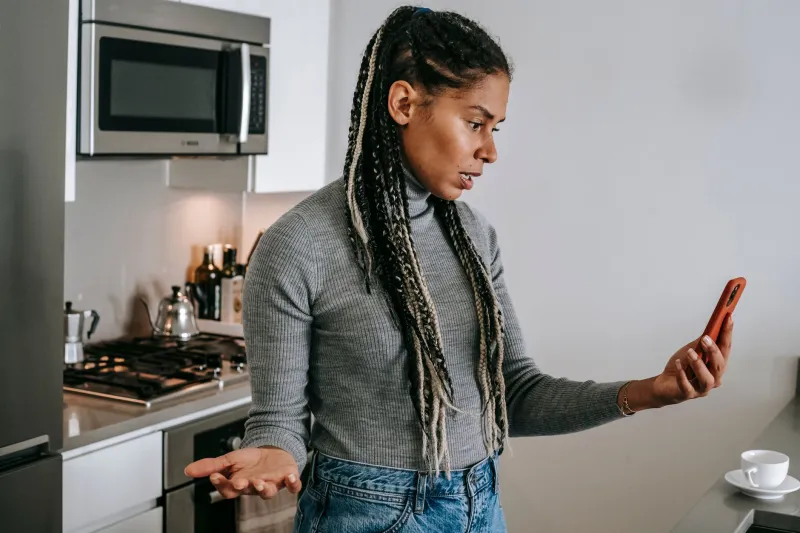
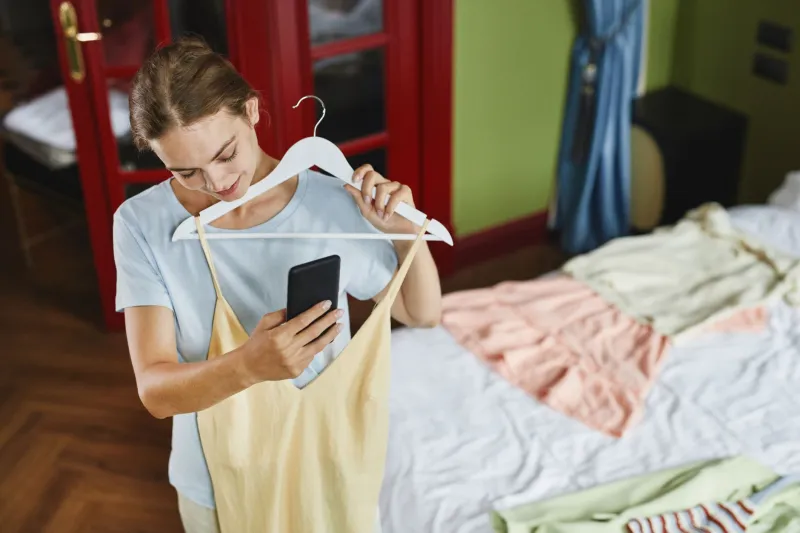
The screenshot lives in your camera roll. You've looked at it approximately thirty times. The influencer is standing somewhere that appears to be a European street, or possibly a very well-styled parking garage — it's hard to tell, because the light is doing something so impossibly warm and golden that the location has become irrelevant. She's wearing wide-leg trousers, a tucked cream blouse, and a structured shoulder bag that costs more than two months of your car insurance. The whole thing looks effortless. Intentional. Like she woke up this way.
You saved the image under a folder called "inspo." You have 847 images in that folder. You have never once successfully recreated any of them.
This is influencer cosplay, and it is one of the most optimistic, humbling, and quietly expensive hobbies in modern American life.
The Outfit Exists in a Controlled Environment
The first thing to understand about any influencer outfit post is that it is not a documentary. It is a production. The image you're looking at represents the output of a process that likely involved a professional or semi-professional photographer, a location scouted specifically for its light and background, multiple takes, selective editing, a carefully considered caption written to sound spontaneous, and quite possibly a stylist or at minimum a very patient friend who took forty-six photos before one worked.
The clothes themselves may have been gifted, loaned, or purchased at a discount through a brand partnership. They may have been tailored. They are almost certainly being worn by someone whose job, in a very literal sense, is to wear clothes well — a skill that involves practice, awareness of camera angles, and a learned understanding of how to move and stand to make an outfit read correctly on screen.
You are a person who got dressed this morning while answering a text. The conditions are not comparable.
The Shopping Phase: Optimism, Fully Deployed
None of this stops you, because the shopping phase of influencer cosplay is genuinely enjoyable. This is the part where the dream is still intact. You've screenshot the look, identified the approximate pieces, and begun the process of finding "similar" items at a price point that doesn't require a payment plan.
The wide-leg trousers are $340 in the original. You find a version at a fast fashion retailer for $38. They look almost identical in the product photo. You add them to your cart with the confidence of someone who has cracked the code.
The bag is $1,200 and non-negotiable, so you pivot to a structured tote that shares approximately the same silhouette. The blouse is sold out in your size, so you find something cream-colored and vaguely similar. You locate a pair of shoes that, if you squint at the screenshot, could reasonably be described as "in the same family."
By the time everything arrives, you've spent $180 and assembled something that, on paper, contains all the same components as the original look. The trousers. The blouse situation. The bag-adjacent item. The shoes. You are ready.
The Assembly: Where Things Start to Diverge
Putting the look together is when the first cracks appear. The trousers, which looked fluid and architectural in the product photo, have a slightly different drape than expected. The waistband sits at a different point than it did on the model. The fabric moves differently — not badly, just differently, in a way that changes the entire silhouette by about fifteen percent.
The blouse is almost right but not quite, and "almost right" in fashion is a very specific kind of wrong. It's not wrong enough to send back. It's just slightly off in a way that you can't fully articulate but can absolutely feel. The proportions between the top and bottom are slightly different from the screenshot. The tuck isn't quite landing the way it should.
You stand in front of the mirror. You look at the screenshot. You look at the mirror. You look at the screenshot again.
The components are all there. The vibe is not.
The Lighting Problem Nobody Warns You About
Assume for a moment that the outfit is actually working better than your brain is giving it credit for. You decide to take a photo to evaluate. You go to the best-lit spot in your apartment, which is near the window in the afternoon when the light comes in from the west.
The light in your apartment is not the light in the influencer's photo. This is not your fault. It is also not fixable without purchasing equipment that would make the whole exercise cost more than the original $340 trousers.
The influencer's golden-hour European street light (or very aesthetic parking garage light) is a specific, irreproducible atmospheric condition that your phone camera, your apartment window, and your Tuesday afternoon cannot recreate. The warm glow that made the cream blouse look luxurious makes your cream blouse look like a slightly different shade of off-white. The shadows that gave the outfit depth and dimension in the original photo are not present in your photo, which looks flat and slightly washed out despite your best efforts.
You try the flash. The flash is worse. You try the ring light you bought during a previous influencer cosplay attempt. The ring light is better but creates a specific kind of artificial brightness that reads as "trying to take a good photo" rather than "naturally good photo taken in passing."
The vibe, it turns out, was mostly the light.
The Crushing Realization and Why You'll Do It Again
At some point in every influencer cosplay attempt, you arrive at the same destination: the understanding that what you were trying to replicate wasn't really the outfit at all. It was the photograph. The edited, lit, composed, curated photograph of an outfit worn by a person whose job is to look good in photographs, taken in conditions specifically designed to make the clothes look their best.
The outfit itself — the actual garments, worn by an actual person in actual lighting — is almost certainly less magical than the image suggested. This is not a revelation unique to your experience. It is the foundational gap between fashion content and fashion reality, and it exists at every price point, for every person, in every geographic location.
And yet. You will see another screenshot. The light will be doing something extraordinary. The proportions will look achievable. You will think: okay, but this one I could actually do.
You'll open the shopping tab. You'll start with the trousers.
This is not a flaw in your judgment. It is optimism, expressed through fashion — the recurring belief that the next attempt will be the one where the vibe makes the trip. Sometimes it almost does. Sometimes you put something together that isn't the original look but is genuinely, accidentally, yours.
That version, it turns out, photographs better anyway.