The Art of Expensive Nothing: Quiet Luxury and the Exhausting Performance of Not Trying
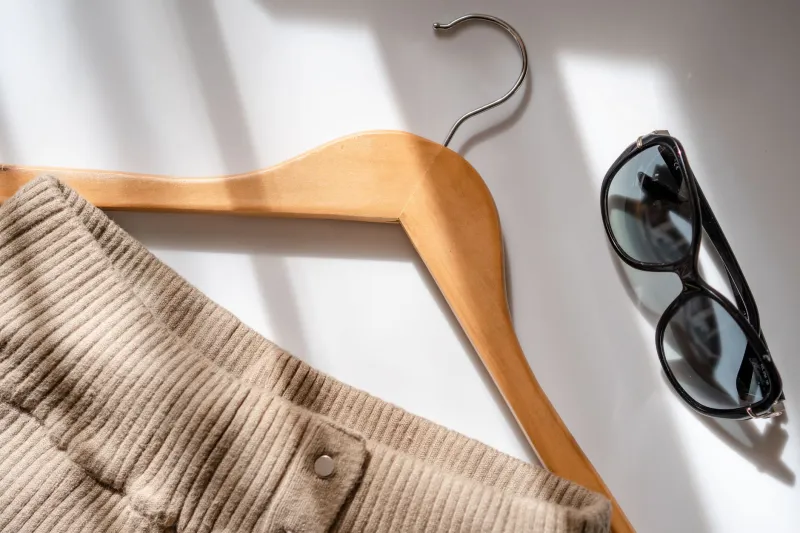
At some point in the last few years, fashion decided that the most powerful statement you could make was no statement at all. No logos. No color. No discernible effort. Just a perfectly fitted cashmere crewneck in a shade best described as 'expensive oatmeal,' worn by someone who definitely didn't spend forty minutes choosing it.
This is quiet luxury: the aesthetic that costs more than a used car to assemble and announces itself through studied, deliberate absence. It is, depending on your perspective, either a sophisticated rejection of consumer noise or the most elaborate fashion joke anyone has ever told with a straight face.
Both things are true. That's what makes it so interesting and so deeply, profoundly exhausting.
What Quiet Luxury Actually Means (And What It's Saying)
Let's decode the language here, because quiet luxury communicates constantly — it just pretends it isn't.
The core proposition is this: real wealth doesn't need to announce itself. The person in the $1,200 Loro Piana bomber isn't wearing a logo because they don't need your recognition. They've moved past that. They're operating on a plane where the quality of the fabric is the flex, the drape is the status signal, the fit is the conversation.
The message is: I am so far beyond trying to impress you that I've looped back around to looking like this.
Which would be a perfectly fine aesthetic choice if it weren't also, quietly, the loudest possible brag. Wearing nothing is a flex precisely because most people can't afford the nothing. A plain white t-shirt from Entireworld or James Perse costs $80. A 'simple' pair of trousers from The Row will run you $900. The whole architecture of quiet luxury is built on the assumption that you know the difference — and that your neutrals are the right neutrals.
The Beige Anxiety Industrial Complex
Here is the specific anxiety quiet luxury has introduced into the fashion ecosystem, and it is genuinely new: the fear that your minimalism isn't expensive enough to register as intentional.
Old fashion anxiety was legible. You either had the logo or you didn't. You were in trend or you weren't. The visual grammar was relatively clear. Quiet luxury broke the decoder ring. Now a person in a camel coat could be wearing something from The Row or something from H&M, and the entire social transaction depends on which one it is — but neither party is allowed to ask directly.
This has created a generation of people squinting at each other's knitwear in the way that strangers used to squint at each other's handbag hardware. The questions are the same. The answers are just harder to find.
Is that cashmere? Is that a good cashmere? How much is a good cashmere? Should I know that?
Congratulations. You are now a participant in quiet luxury's game, whether you signed up or not.
The Succession Effect
Credit where it's due: the cultural moment that turbocharged this aesthetic was HBO's Succession, specifically the Shiv Roy school of dressing — muted palettes, impeccable tailoring, zero ornamentation, the visual language of inherited wealth that has never needed to prove anything. The costumes on that show were doing serious narrative work, and fashion Twitter noticed immediately.
What followed was a mass translation attempt. Millions of people trying to approximate the visual vocabulary of fictional billionaires through accessible retail. Which is fine! Aesthetic inspiration is how fashion has always worked. The problem is that 'old money' as an aesthetic is almost impossible to genuinely replicate on a budget, because old money as an aesthetic is specifically about the accumulation of quality over time — the worn-in loafer, the actual vintage cashmere, the coat that has been resoled twice.
Buying a fast fashion version of quiet luxury is the fashion equivalent of putting a fireplace screensaver on your laptop. The vibe is technically present. Something is missing.
The Capsule Wardrobe Overlap
Quiet luxury and the capsule wardrobe movement are cousins, and they share a fundamental contradiction. Both movements are framed as simplicity — fewer things, better things, a wardrobe stripped to essentials. Both movements, in practice, tend to inspire more shopping than they prevent.
The capsule wardrobe needs its perfect white shirt. The quiet luxury aesthetic needs its perfect ivory shirt. These are technically different shirts and you may need both of them. You may also need the ecru shirt for transitional weather and the cream shirt for evenings. None of this was the original pitch.
The minimalism aesthetic, in any of its forms, has a remarkable ability to generate maximalist consumption behavior in its pursuit. The quieter the luxury, the more pieces you apparently need to achieve the silence.
Who Quiet Luxury Is Actually For
Here's the honest answer: quiet luxury, as an aesthetic philosophy, works best for people who are either genuinely wealthy enough to buy the real thing, or genuinely confident enough not to care whether anyone notices.
The first group doesn't need the trend. The second group doesn't need the trend either.
Everyone else is standing in the middle of a Banana Republic trying to figure out if 'light taupe' reads as intentional or accidental, which is a specific kind of modern suffering that didn't exist ten years ago and that no one asked for.
Wear the color. Wear the logo. Wear the thing that makes you feel something when you put it on. Performing indifference is the most expensive and least rewarding performance in the entire fashion catalog.
And if you're going to spend $900 on trousers, at least make them interesting.