Thrift Harder: How Secondhand Shopping Became a Blood Sport With Aesthetic Stakes
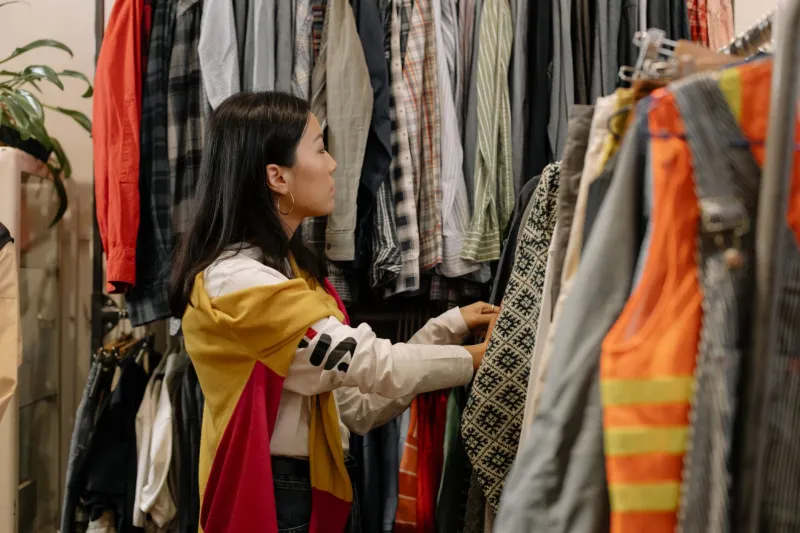
There was a time — not so long ago — when thrifting was something people did quietly. You'd slip into a Goodwill on a Tuesday, dig through a rack of someone else's mistakes, and emerge victorious with a corduroy jacket that smelled faintly of cedar and mystery. Nobody needed to know. The price tag was the whole point.
That era is over. Thrifting has been gentrified, gamified, and Instagram-storied into something barely recognizable from its humble origins. What was once the domain of broke college students and actual vintage enthusiasts is now a competitive sport with unspoken rules, status hierarchies, and a surprisingly aggressive commentary section.
Welcome to the Thrift Industrial Complex. Population: everyone who's ever posted a haul video.
The '$3 Find' as Social Currency
Let's start with the post itself. You know the one. A flat lay on a linen bedsheet. A perfectly staged pile of 'scores.' The caption: Couldn't believe this was only $4. Vintage Ralph Lauren. People really sleep on Goodwill.
The subtext, of course, is never about the four dollars. The four dollars is a prop. What's actually being communicated is: I have superior taste, superior patience, and a superior eye, and I found this before you did. The price point isn't a flex about frugality — it's a flex about discernment. The dollar amount is just the receipt for the personality.
This is the thrifted gatekeeping paradox in its purest form. The entire appeal of vintage shopping — accessibility, affordability, the democratic chaos of the rack — has been quietly co-opted into a new kind of exclusivity. One that doesn't cost money to enter but absolutely costs something.
The Secret Store Problem
Nothing reveals the competitive architecture of modern thrifting faster than the question: Where do you find this stuff?
Ask a serious thrifter where they shop and watch the micro-expressions cycle through in real time. There's a flicker of genuine internal conflict. Do they share the location? Reveal the Salvation Army in the suburban strip mall that still hasn't been 'discovered'? Point you toward the church rummage sale that reliably produces 1970s workwear every third Saturday?
Absolutely not.
The serious thrifter has spent months — possibly years — building their personal circuit of underpriced goldmines, and they are not handing that map over because you asked nicely. This is information earned through time, mileage, and a very high tolerance for fluorescent lighting. Sharing it freely would be like a fisherman giving away their spot on the lake. You'll get vague gestures toward 'just checking different areas' and a subject change.
The irony is spectacular. A hobby predicated on the idea that good stuff should be accessible to everyone has developed a fiercely guarded insider knowledge economy.
The Reseller Villain Arc
Of course, no conversation about competitive thrifting is complete without addressing the reseller — the person who has transformed the thrift store from a shopping destination into a supply chain. They arrive early, move fast, and have a scanner app that knows the eBay market value of a Levi's tag before you've found the right aisle.
The thrifting community's relationship with resellers is complicated in the way that only the internet can make things complicated. On one hand: capitalism, free market, hustle culture, respect the grind. On the other hand: You bought all the good stuff and now it's $85 on Depop and I hate you.
The reseller has become thrift culture's designated antagonist — the person blamed for the empty racks and the rising Goodwill prices (yes, those are going up too, which is a whole separate grief spiral). Whether that blame is entirely fair is genuinely debatable. What isn't debatable is that the existence of the reseller has turned casual thrifting into something that feels vaguely adversarial, like you're competing for a limited resource that someone else already has a better strategy for.
Sustainability as Aesthetic
Here's where it gets philosophically uncomfortable. The mainstream adoption of thrifting arrived wrapped in the language of sustainability. Fast fashion is destroying the planet. Buy secondhand. Reduce your footprint. All of which is true and good and worth caring about.
But somewhere in the translation from genuine environmental concern to trending lifestyle content, the sustainability angle became less about the planet and more about the personal brand. The thrift haul video is rarely framed as I'm trying to reduce textile waste and more frequently as look at my incredible finds and my incredible eye and my incredible ability to curate.
The environmental halo is real, but it's also doing a lot of heavy lifting for what is, at its core, a shopping hobby with a more interesting origin story. Which isn't a condemnation — shopping is fine, hobbies are fine — but the cognitive dissonance of buying more stuff to feel better about buying stuff is worth at least a raised eyebrow.
So What's Actually Going On Here
Thrifting went mainstream because it offered something the regular retail experience couldn't: the treasure hunt. The unpredictability. The genuine thrill of finding something specific in a place that makes no promises. That's a real and legitimate joy, and it explains why people who could absolutely afford to shop anywhere still show up at the bins on a Saturday morning.
The problem isn't that thrifting became popular. The problem is that popularity imported all of retail culture's worst tendencies — the status signaling, the gatekeeping, the competitive scarcity anxiety — into a space that used to feel genuinely low-stakes.
You can love thrifting. You can love the hunt, the finds, the improbable victories, the $4 blazer that genuinely changed your life. You're allowed to post about it.
Just maybe drop a pin on the store location once in a while. The racks are big enough.