The Comfort Costume: Why Your Oversized Hoodie Is Actually a Cry for Help
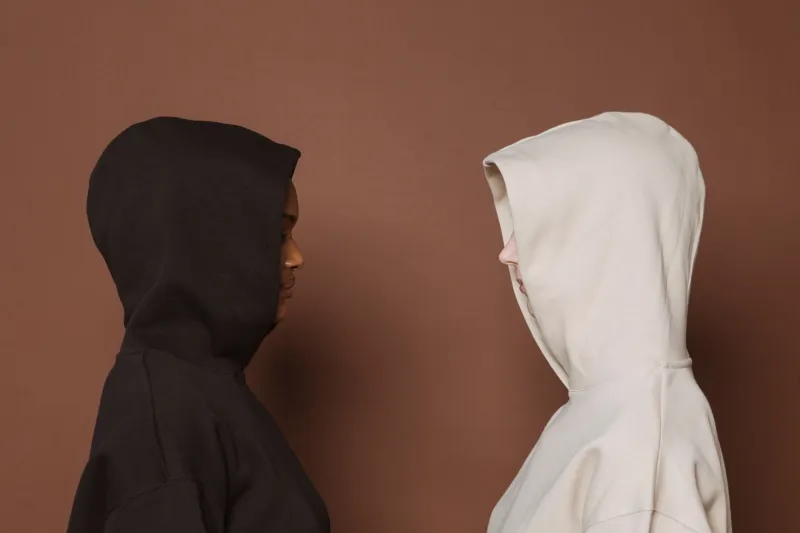
Let's establish something upfront: nobody is judging you for wearing an oversized hoodie to a casual hangout. Nobody is raising an eyebrow at your worn-in sneakers on a Sunday afternoon errand run. America is a free country, and you are free to dress like you're perpetually recovering from something.
The problem — and there is a problem — is the lie we've all agreed to tell each other. The lie that the comfort outfit is just comfort. That it's practical. That it's a neutral, apolitical choice made by a person who simply prioritizes function over form.
It is not. The comfort outfit is armor. And we need to talk about it.
The Anatomy of the Comfort Costume
Every American owns at least one outfit that functions less as clothing and more as a force field. You know the one. The hoodie that's been through seventeen wash cycles and still smells faintly of 2019. The leggings that have attended more therapy sessions than actual gym visits. The sneakers so broken-in they've essentially become orthopedic footnotes to your life story.
There's nothing wrong with any individual piece. The problem is the deployment. The comfort costume doesn't just show up on lazy Saturdays. It shows up at birthday dinners. It shows up at Thanksgiving. It shows up at events where someone — somewhere — made a reservation, and that person quietly weeps when you walk in wearing what appears to be a sleeping bag with a drawstring.
The tell is always the explanation. Nobody who is genuinely comfortable in their outfit announces it. They just wear the outfit. But the comfort costume requires a verbal press release. "I just wanted to be comfortable tonight." Said with the energy of someone who has made a very deliberate point and dares you to argue with it.
Comfort as a Personality Statement (It Isn't)
Somewhere around 2016, American culture collectively decided that caring about your appearance was suspicious. Trying too hard became a character flaw. The aspirational look shifted from polished to effortless, which sounds like the same thing but is, in practice, the complete opposite. Effortless requires enormous effort. Comfort, however, requires nothing — and that became the whole point.
The athleisure boom didn't help. When Lululemon convinced half the country that yoga pants were appropriate for every occasion from the grocery store to a work presentation, the floodgates opened. If performance fabric was acceptable everywhere, then surely everything was acceptable everywhere. The logic tracked, loosely. The execution went off the rails almost immediately.
Now we live in a world where "I dressed for comfort" functions as both a fashion excuse and a moral stance. It signals authenticity. It signals that you are not a shallow person who cares about surfaces. It signals, paradoxically, that you are above fashion — which is itself a very fashionable thing to signal.
Meanwhile, the person saying it went home and changed three times before leaving the house.
The Thanksgiving Elastic Waistband: A Case Study
No garment better illustrates the comfort costume phenomenon than the elastic-waist pant deployed at a holiday meal. On the surface, it's practical. You're eating. Waistbands expand. This is biology.
But examine it more closely. The elastic-waist Thanksgiving pant isn't worn because the wearer forgot that belts exist. It's worn as a statement about the holiday itself — a declaration that this is a real American Thanksgiving, a serious eating occasion, and anyone who shows up in actual trousers is missing the point culturally.
The elastic waistband has become a Thanksgiving costume. A character choice. The person wearing it isn't comfortable in any meaningful emotional sense — they're performing comfort as a genre.
This is the core diagnosis: comfort dressing is rarely about comfort. It's about the idea of comfort. It's about what comfort communicates. And what it communicates, most of the time, is: I could not be bothered, and I want you to respect that.
The Judgment We Don't Talk About
Here's the part that makes the whole phenomenon genuinely funny: the people most committed to the comfort costume are also, quietly, the most judgmental people in the room.
You know this is true. The person who shows up to a dinner party in sweats is the first one to clock what everyone else is wearing. They've already mentally catalogued who tried too hard, who underdressed, who is wearing something they clearly bought specifically for this occasion. The comfort costume doesn't opt out of fashion criticism — it just pretends to.
We are all doing this. Every single person who has ever announced "I just didn't feel like getting dressed up" has, in the same breath, noticed that someone else did. And formed an opinion about it. And possibly texted someone about it later.
The comfort outfit is not a rejection of fashion culture. It is fashion culture, wearing a hoodie.
The Actual Diagnosis
If the comfort costume is armor, what is it protecting against? Mostly: the risk of trying and being seen trying. In an era where authenticity is the highest social currency, visible effort feels like a vulnerability. If you dress up and nobody notices, or worse, someone notices in the wrong way, you've exposed something. But if you show up comfortable, you've pre-empted the whole conversation. You cannot be judged for failing to impress if impressing was never on the table.
It's a genuinely clever psychological maneuver. It's also, when deployed constantly, a little exhausting for everyone around you.
The good news is that the fix is simple. Wear what you want. Dress up sometimes. Dress down sometimes. Just stop narrating it. Nobody needs the press release. The hoodie can speak for itself — and honestly, after seventeen wash cycles, it's got plenty to say.