Professional Returners: The Americans Who Turned Shopping Into a Cardio Workout
The Return Route Champions
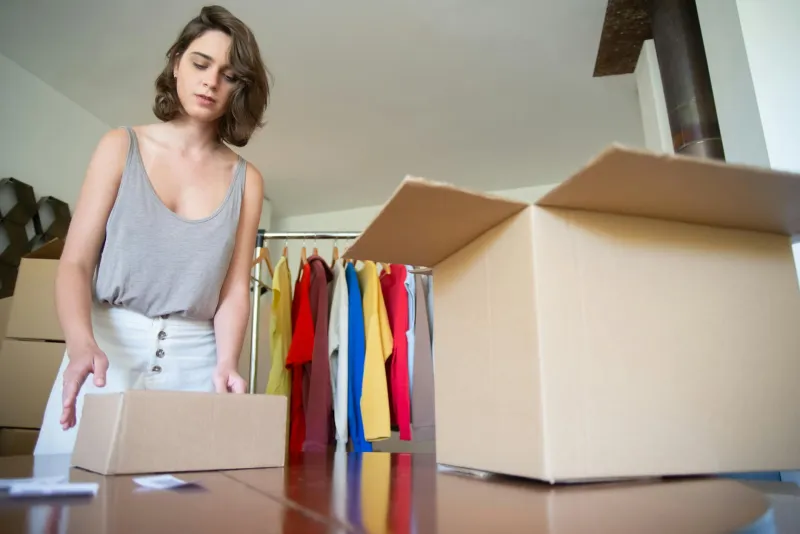
Jessica makes her weekly pilgrimage to the UPS store with the dedication of a marathon runner. She's got her route mapped out: Target returns at the customer service desk, Amazon returns at the UPS counter, and if she's feeling ambitious, a stop at the post office for that one random brand that insists on using their own shipping labels.
The UPS guy knows her by name. Not because she's friendly, but because she single-handedly keeps his store in business.
The Free Returns Brain Rewiring Project
Somewhere in the last decade, American retailers accidentally performed mass brain surgery on an entire generation. They promised us "free returns" and "try before you buy," and we heard "treat your bedroom like a personal shopping mall with a very generous return policy."
We've become a nation of professional maybe-buyers. Every purchase is conditional. Every shopping cart is a rough draft. We buy three sizes of the same jeans because choosing one feels too permanent, too committed, too much like we actually know what size we are.
The Temporary Closet Phenomenon
Walk into any American bedroom, and you'll find evidence of the return lifestyle: clothes with tags still on, draped carefully over chairs to avoid wrinkles before their inevitable journey back to the warehouse. These aren't purchases — they're extended trials. Rental clothing without the rental fees.
Some items never even make it out of their packaging. They arrive, get briefly considered, and go straight into the "return pile" — a growing mountain of regret and indecision that lives by the front door like a shrine to our inability to make choices.
The UPS Store Social Club
The UPS store has become America's unofficial therapy center, where we all gather to confront our shopping mistakes. There's an unspoken camaraderie among the regular returners. We nod at each other knowingly. We're all here for the same reason: we thought we needed things, but it turns out we just needed the dopamine hit of clicking "add to cart."
The employees have seen it all. The woman returning seventeen different shades of the "same" white t-shirt. The guy with a box full of tech gadgets he bought during a 3 AM Amazon spiral. The college student returning textbooks that cost more than her rent because she dropped the class after realizing it was at 8 AM.
The Psychology of Maybe
Free returns have turned us all into commitment-phobes. Why choose when you can have everything delivered and decide later? Why make decisions in the store when you can make them in the comfort of your own home, with better lighting and the ability to try things on with your actual wardrobe?
But here's the plot twist: we're spending more money in a system designed to help us spend less. The return option makes us bolder, more impulsive. We'll buy that $200 dress because "I can always return it," but somehow the act of buying it makes us more likely to keep it. Possession is nine-tenths of the law, and apparently, it's also nine-tenths of convincing yourself you need something.
The Return Day Planning Committee
Returning items has become its own form of project management. We have return deadlines marked on calendars. We schedule return runs like appointments. We strategically batch returns to make the trip "worth it" — because somehow driving to three different stores to return things we never should have bought feels more efficient than just not buying them in the first place.
Some people have turned it into a social activity. "Want to come with me to return some stuff?" has become the new "want to grab coffee?" It's errands disguised as hangout time, productivity disguised as procrastination.
The Environmental Guilt Complex
Deep down, we all know this system is completely insane from an environmental perspective. Items shipped to us, tried on for thirty seconds, then shipped back to a warehouse where they may or may not be resold. It's like a carbon footprint conga line, and we're all dancing along because it's easier than making decisions.
But the guilt is quickly overwhelmed by the convenience. "At least I'm not keeping things I don't want," we tell ourselves, as if the problem was our closets being too full and not our inability to know what we actually want before we buy it.
The Return Pile Archaeology
Every return pile tells a story. There's the impulse buy from a targeted Instagram ad (those leggings that promised to change your life but just made your legs look like sausages). The pandemic hobby supplies (the bread-making kit, the watercolor set, the yoga blocks that witnessed exactly one downward dog). The aspirational purchases (the blazer for the promotion that never came, the fancy workout clothes for the gym membership you canceled).
Dig deeper, and you'll find the seasonal optimism purchases: the swimsuit bought in February because you were planning to "get in shape by summer," the boots bought in July because they were on sale and you were already planning your fall personality transformation.
The Professional Return Strategies
We've developed sophisticated return methodologies. There's the "keep the tags on everything for the first week" strategy. The "buy multiple sizes and return the ones that don't fit" approach. The "order from different retailers to compare quality" technique that turns every purchase into a science experiment.
Some people have become return ninjas, gaming the system with military precision. They know which stores have the most lenient return policies, which ones don't require receipts, and which ones will take returns even if you've clearly worn the item (we see you, person returning shoes with obvious sidewalk scuff marks).
The Return Liberation
Maybe the return lifestyle isn't a bug — it's a feature. Maybe we've accidentally stumbled onto a more honest way of shopping, one that acknowledges that we don't actually know what we want until we see it in our own space, with our own stuff, in our own lighting.
Or maybe we've just turned shopping into the world's most inefficient rental service, complete with gas money and emotional labor.
Either way, see you at the UPS store. I'll be the one with the box full of regrets and a receipt I definitely forgot to print.