The $4,000 Minimalist Makeover: How 'Less Is More' Became Fashion's Most Expensive Math Problem

The Great Minimalist Swindle
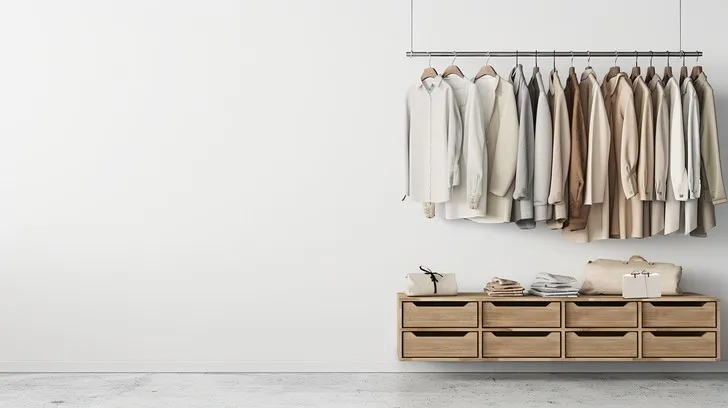
Let me paint you a picture: You're scrolling through Instagram, and there she is again — the influencer with the perfectly curated closet containing exactly twelve items, all in shades of beige that have names like "oatmeal" and "mushroom." She's standing in front of her minimalist wardrobe looking serene and financially responsible, promising that you too can achieve this zen-like state of having nothing to wear (but in an intentional way).
The caption reads: "My 10-piece capsule wardrobe has changed my life! No more decision fatigue! No more clutter! Just these perfect, versatile pieces that mix and match effortlessly!"
What she doesn't mention: Those ten pieces cost more than your car.
The Capsule Wardrobe Industrial Complex
Somewhere along the way, the fashion industry figured out how to monetize minimalism. They took the concept of "buying less" and turned it into "buying less, but make it luxury." Suddenly, having fewer clothes wasn't about saving money — it was about spending more money on fewer, "better" things.
The capsule wardrobe has become fashion's most successful pyramid scheme, except instead of selling supplements, we're selling the idea that thirty pieces of clothing are too many, but ten $400 pieces are just right.
The Pinterest Board of Broken Dreams
Your "Capsule Wardrobe Inspo" Pinterest board is a monument to your own self-deception. It's filled with photos of impossibly chic European women in perfectly tailored neutral basics, looking like they've never spilled coffee on themselves or needed to dress for a Zoom call while also walking their dog.
These women exist in a world where one white button-down can seamlessly transition from "business meeting" to "casual brunch" to "romantic dinner." In reality, that same white shirt will show every stain, wrinkle if you look at it wrong, and somehow make you look like either a bank teller or someone who's given up on life, depending on the day.
The Great Wardrobe Purge and Panic
Step one of building a capsule wardrobe is always the same: get rid of everything you own. Marie Kondo told us to keep only what "sparks joy," and the capsule wardrobe gurus told us joy comes in neutral colors only.
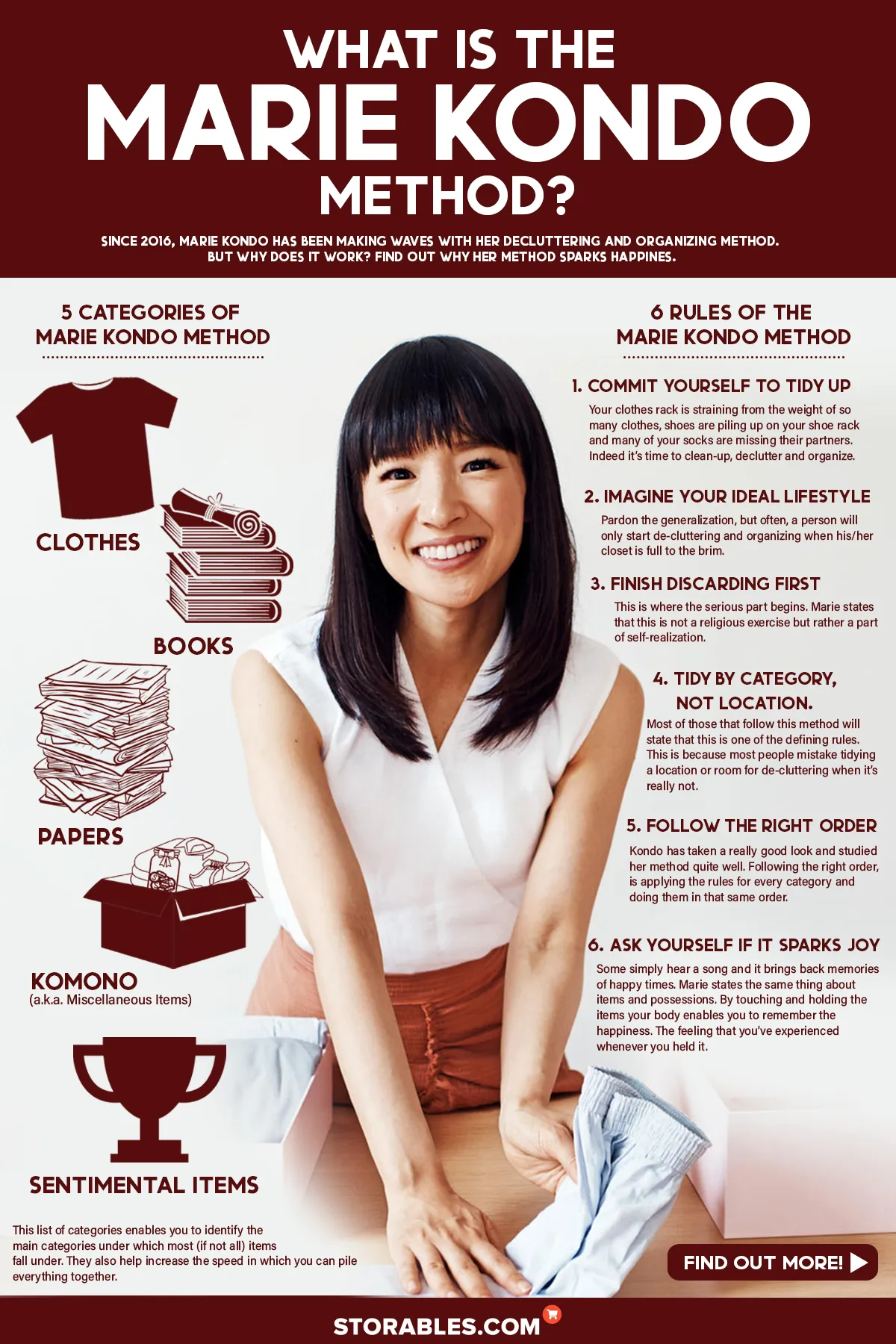 Photo: Marie Kondo, via storables.com
So you purge. Out go the colorful dresses, the patterned tops, the shoes that don't go with everything but make you happy. You donate bags full of clothes that actually fit your lifestyle in favor of a theoretical wardrobe that fits an Instagram aesthetic.
Then you stand in your empty closet and realize you've just donated your entire personality to Goodwill.
The $400 White T-Shirt Justification
This is where the math gets truly creative. That $400 white t-shirt isn't expensive — it's an "investment." You'll wear it 100 times, which breaks down to just $4 per wear! (Never mind that your $15 Target t-shirt could also be worn 100 times and would break down to 15 cents per wear, but we're not doing that math right now.)
The justifications multiply:
- "It's ethically made!" (So are lots of clothes that don't cost a month's rent)
- "The quality is amazing!" (It's cotton. It's literally just cotton.)
- "It goes with everything!" (So does the $15 one)
- "I'll have it forever!" (Until you spill pasta sauce on it next week)
The Beige Uniform of Conformity
Here's the dirty secret about capsule wardrobes: they all look exactly the same. Scroll through #capsulewardrobe on Instagram, and you'll see the same ten items over and over: the white button-down, the black blazer, the camel coat, the dark jeans, the white sneakers, the black pants, the striped shirt, the little black dress, the neutral sweater, and the trench coat.
It's like everyone got the same memo from the Department of Inoffensive Fashion. We've gone from having too many choices to having no choices, and somehow convinced ourselves this is liberation.
The Mix-and-Match Mythology
The capsule wardrobe promises infinite outfit combinations from minimal pieces. "With these 10 items, you can create 30 different looks!" they claim, armed with mathematical equations that would make a statistician weep.
In reality, you end up wearing the same three combinations over and over because:
- Half the "combinations" look ridiculous
- The weather doesn't cooperate with your neutral-toned fantasy
- Your actual life requires clothes for situations not covered by "effortless chic"
The Lifestyle Requirements Fine Print
Capsule wardrobes come with lifestyle requirements that nobody mentions upfront:
- You must live in a climate with minimal weather variation
- Your job must be in the narrow band between "creative casual" and "business casual"
- You cannot have children, pets, or the tendency to spill things
- Your social life must consist entirely of activities that require the same level of dress
- You must be comfortable looking exactly like everyone else who fell for this same trend
The Hidden Costs of Simplicity
Building a capsule wardrobe isn't just expensive upfront — it's expensive forever. When you only own ten items, each replacement becomes a major purchase decision. When your $200 jeans rip, you can't just grab a backup pair from your closet. You have to research, compare, and invest in another "perfect" pair.
Plus, the pressure to choose only "perfect" pieces means endless research, returns, and decision paralysis. You'll spend more time shopping for ten items than you ever did shopping for fifty.
The Great Capsule Wardrobe Exodus
Eventually, most people quietly abandon their capsule wardrobe dreams. They start sneaking "non-capsule" items back into their closets. A colorful scarf here, a patterned dress there. They realize that having a personality in their clothing choices isn't actually a character flaw.
But they don't post about it on Instagram. There's no #CapsuleWardrobeRecovery hashtag. They just quietly go back to Target and remember why having options is actually kind of nice.
The Real Minimalism
True minimalism isn't about having exactly ten pieces in exactly the right neutral shades. It's about buying less, choosing well, and wearing things until they fall apart. It's about clothes that fit your actual life, not your aspirational Instagram aesthetic.
Your $20 jeans that you wear twice a week for three years are more minimalist than any $300 "investment" piece you wear twice because you're too afraid to get it dirty.
The Verdict
The capsule wardrobe isn't minimalism — it's maximalism in disguise. It's the fashion equivalent of those "simple" recipes that require seventeen specialty ingredients you'll only use once.
Real simplicity is wearing what you like, buying what you need, and not requiring a mathematical formula to get dressed in the morning. Your closet doesn't need to look like a Pinterest board. It just needs to work for your life.
Now, if you'll excuse me, I need to go put on my $15 Target t-shirt and feel absolutely no guilt about it.