The Curated Rebellion: How Every 'Different' Girl Bought the Same Pinterest Board
The Great Individuality Scam
Walk into any coffee shop in Brooklyn, Austin, or Portland on a Tuesday afternoon, and you'll witness one of modern fashion's most fascinating phenomena: a room full of completely unique individuals wearing identical outfits. The vintage Levi's jacket (thrifted, obviously). The perfectly imperfect messy bun secured with what appears to be a pencil but is actually a $34 sustainable hair stick from Reformation. The ballet flats that somehow cost more than actual pointe shoes.
Welcome to the "I'm Not Like Other Girls" capsule wardrobe, where rebellion has been so thoroughly commodified that nonconformity comes with its own starter pack.
The Algorithm Knows You Better Than You Know Yourself
It started innocently enough. You were scrolling through TikTok at 2 AM (as one does), and suddenly there she was: a girl with perfectly tousled hair explaining how she "curated" her entire personality around vintage band tees and French pharmacy skincare. She wasn't trying to be trendy, she insisted. She just knew what she liked.
Three weeks later, your credit card statement tells a different story. Somewhere between the "authentic vintage" Ramones shirt (manufactured in 2019) and the third pair of wide-leg trousers that make you feel "effortlessly chic," you realize you've been punk'd by the most sophisticated marketing campaign in human history.
The beauty of algorithmic individuality is its complete invisibility. Unlike traditional advertising, which at least had the decency to announce itself with jingles and celebrity endorsements, the "curated aesthetic" creeps in through your For You Page like a well-dressed parasite. One day you're a normal person who owns clothes, the next you're explaining to your friends why you "only shop secondhand" while wearing a $180 "vintage-inspired" sweater from Urban Outfitters.
The Starter Pack Breakdown
Let's conduct a proper autopsy of this phenomenon, shall we? Every "Not Like Other Girls" wardrobe contains the following items, purchased separately over the course of six months, each one feeling like a deeply personal discovery:
The Oversized Blazer: Thrifted (or "thrifted") from a carefully curated vintage shop that somehow has 47 identical blazers in different colors. Worn exclusively with the sleeves rolled up in that specific way that suggests you're too busy being effortlessly cool to properly fit your clothes.
The Perfect White T-Shirt: Not just any white t-shirt, mind you. This is a $68 white t-shirt made from organic cotton by a small French company that definitely doesn't mass-produce identical shirts for every "conscious consumer" in America. The fact that your best friend owns the exact same one is pure coincidence.
The Statement Earrings: Large, geometric, and purchased from a "small business" that somehow has enough inventory to supply every alternative girl in your zip code. They're not trying too hard; they just "elevate" your look.
The Perfect Vintage Jeans: These took three months to find, involved visiting seventeen different thrift stores, and cost more than new designer jeans. But they have "character," which is apparently worth the psychological trauma of competing with other "individual" shoppers for the same aesthetic.
The Great Thrifting Theater
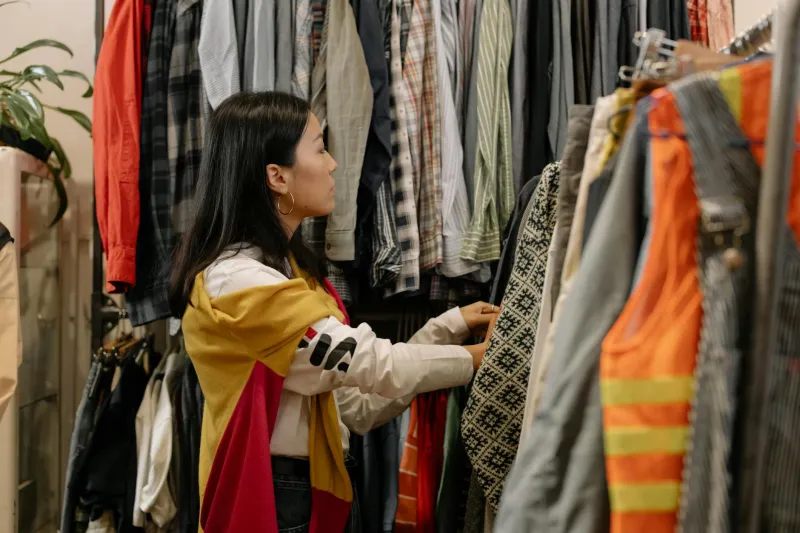
Nothing exposes the manufactured nature of curated individuality quite like the modern thrift store experience. What was once a necessity for budget-conscious shoppers has become a carefully choreographed performance art piece called "Finding Your Personal Style."
The script is always the same: Enter thrift store with canvas tote bag and prepared backstory about "sustainable fashion." Rifle through racks while performing visible disappointment at the lack of "good pieces." Take Instagram story of yourself looking contemplatively at a rack of clothes with caption "thrift haul day ✨." Leave with three items that cost more than they would have new, but feel morally superior about the purchase.
The real plot twist? Half the "vintage" pieces in trendy thrift stores are fast fashion items from three years ago, which means you're paying premium prices for the same Zara dress that everyone else is buying, just with extra steps and a better origin story.
The Paradox of Personal Style
Here's where things get philosophically weird: Is personal style even possible when the algorithm has already decided what your personality should look like? Every time you click "not interested" on a fashion TikTok, you're inadvertently training a machine to better understand your aesthetic preferences. Every "curated" Pinterest board is actually a carefully calculated response to data points you didn't even know you were providing.
The result is a generation of people who genuinely believe they've developed a unique personal style, when in reality they've all been fed the same visual diet by the same recommendation engines. It's like a massive psychological experiment in which everyone thinks they're the control group.
The Beautiful Irony
Perhaps the most endearing aspect of this phenomenon is how earnestly everyone participates in it. There's something deeply human about the desire to be special, to stand out, to curate an identity that feels authentically yours. The fact that millions of people are doing it in exactly the same way doesn't make the impulse any less valid.
In a weird way, the "I'm Not Like Other Girls" aesthetic has become the most honest fashion movement of our time. It perfectly captures the contradictions of modern life: the desire for individuality in an age of mass customization, the pursuit of authenticity through carefully curated performance, the rebellion against consumerism through strategic consumption.
The Verdict
So what's the solution? Burn your vintage blazer and start shopping exclusively at Target? Embrace the algorithm and lean into your predetermined aesthetic destiny? Delete social media and hope your personal style emerges naturally from some deep, uninfluenced well of creativity?
Probably none of the above. The truth is, the "I'm Not Like Other Girls" phenomenon isn't really about fashion at all—it's about the fundamental human need to feel special in a world that's increasingly good at making everyone feel the same. And honestly? That vintage blazer does look pretty good on you, even if 40 million other people are wearing the identical one right now.
After all, if everyone is not like other girls, then maybe being not like other girls is exactly like being other girls. And that's the most beautifully absurd fashion statement of all.