Less Is More Expensive: How 'Buying Nothing' Became America's Priciest Lifestyle
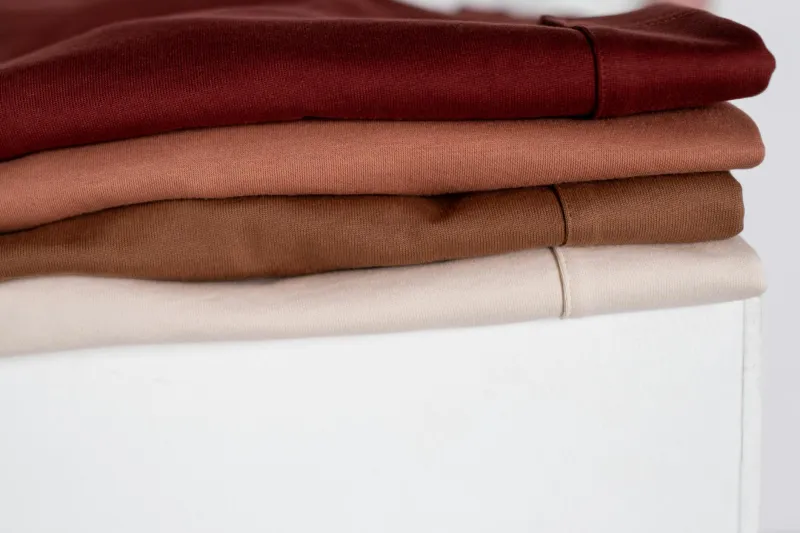
Less Is More Expensive: How 'Buying Nothing' Became America's Priciest Lifestyle
Remember when having a lot of stuff was the flex? Ah, simpler times. Now, thanks to the capsule wardrobe revolution, the ultimate power move is owning exactly 37 items of clothing (or was it 33? The influencers keep changing the number), each costing roughly the same as a car payment.
Welcome to the capsule wardrobe industrial complex, where "buying less" has somehow become the most expensive hobby in America.
The Great French Girl Deception
It all started innocently enough. Someone posted a photo of a Parisian woman looking effortlessly chic in what appeared to be a simple white shirt and jeans. "She probably owns like, five things total," we thought, completely ignoring the fact that this mystery woman was photographed outside a café that probably charges $12 for a croissant.
Suddenly, every lifestyle blogger was preaching the gospel of the capsule wardrobe. "Quality over quantity!" they proclaimed, while casually mentioning their $280 "investment" t-shirt from a brand whose name sounds like it was generated by a Scandinavian baby name app.
The pitch was seductive: Simplify your life! End decision fatigue! Look put-together with minimal effort! What they forgot to mention was that achieving this zen-like state of wardrobe minimalism would require the shopping budget of a small European principality.
The $180 White T-Shirt Phenomenon
Let's talk about the white t-shirt. Once upon a time, you could buy a perfectly serviceable white tee at Target for $8. It did the job. It was white. It was a shirt. Revolutionary stuff.
But the capsule wardrobe gurus had other plans. Suddenly, that Target tee was "fast fashion garbage" that would "fall apart after one wash." Instead, we needed to invest in "elevated basics" from brands with names like Everlane, COS, or Åkestam (I made that last one up, but you believed it for a second, didn't you?).
These aren't just white t-shirts, mind you. They're "ethically-sourced, sustainably-produced, consciously-crafted essentials" that happen to cost more than most people's weekly grocery budget. The cotton was probably hand-picked by monks in organic meditation fields, or something equally ridiculous that justifies the price tag.
The Influencer Pipeline to Financial Ruin
The capsule wardrobe industrial complex runs on a sophisticated influencer ecosystem. At the top, you have the lifestyle gurus who've built entire personal brands around owning fewer things. They post Instagram carousels showing their perfectly curated closets—usually a minimalist walk-in space that's bigger than most New York apartments.
"I only own 30 pieces!" they caption, neglecting to mention that those 30 pieces cost approximately $15,000 and were all gifted by brands hoping to tap into the minimalism market.
Below them are the mid-tier influencers, frantically trying to recreate the aesthetic on a more "relatable" budget. They'll spend three months researching the perfect black blazer, creating comparison charts and hosting Instagram Live sessions about thread count and button quality. By the time they've found "the one," they've spent more on research than most people spend on their entire wardrobe.
The Great Closet Purge Scam
The capsule wardrobe journey always begins the same way: the Great Purge. Influencers document themselves ruthlessly editing their closets, holding up perfectly good sweaters and declaring them "not versatile enough" for their new minimalist lifestyle.
"If it doesn't spark joy AND match at least seven other pieces in my wardrobe, it's gone!" they announce, as if they're Marie Kondo's fashion-obsessed cousin.
What they don't show is what happens next: the panicked late-night shopping sessions six months later when they realize they threw away their only pair of jeans that actually fit properly. Suddenly, they're on a desperate hunt for the "perfect" replacement, which naturally costs three times what the original pair did.
The Minimalism Paradox
Here's where things get really wild: the capsule wardrobe trend has created a generation of people who spend more time thinking about clothes than ever before. Instead of mindlessly grabbing whatever's clean from the closet, capsule wardrobe devotees spend hours researching the "perfect" pieces, reading reviews, and calculating cost-per-wear like they're preparing a dissertation.
They've turned shopping into a full-time hobby while claiming they don't care about fashion. It's like becoming a sommelier and then insisting you don't really drink wine.
The Subscription Box Loophole
The most brilliant part of the capsule wardrobe industrial complex is how it's adapted to its own contradictions. Can't justify buying new clothes when you're supposed to be a minimalist? Enter the "capsule wardrobe subscription box"—a monthly delivery of "curated essentials" that somehow doesn't count as shopping because an algorithm picked them for you.
These services promise to build your capsule wardrobe for you, one $89 monthly box at a time. It's like having a personal shopper for people who claim they hate shopping. The cognitive dissonance is almost impressive.
The Real Cost of Looking Effortless
By now, you've probably done the math. A proper capsule wardrobe—with "investment pieces" that will "last forever"—costs roughly the same as a used Honda Civic. And that's before you factor in the inevitable "capsule refresh" that happens every season when the influencers decide last year's color palette was "so limiting."
The cruel irony is that most people looked better before they embraced minimalism. At least when you had options, you could hide your fashion mistakes among the crowd. Now, when you only own 12 shirts and one of them shrinks in the wash, everyone notices.
The Way Forward (Spoiler: It's Not $300 Jeans)
Look, there's nothing wrong with wanting a simpler wardrobe. The problem is letting lifestyle influencers convince you that simplicity requires a luxury budget. The truth is, you probably already own most of what you need for a functional, stylish wardrobe. You just need to resist the urge to throw it all away in pursuit of some impossible minimalist ideal.
Maybe the real capsule wardrobe was the reasonably-priced clothes we had all along. Revolutionary concept, we know.
Now if you'll excuse us, we need to go calculate the cost-per-wear on our $200 "investment" sneakers. For minimalism, of course.